Maitreya: From the Buddha of the Future to the Laughing Buddha
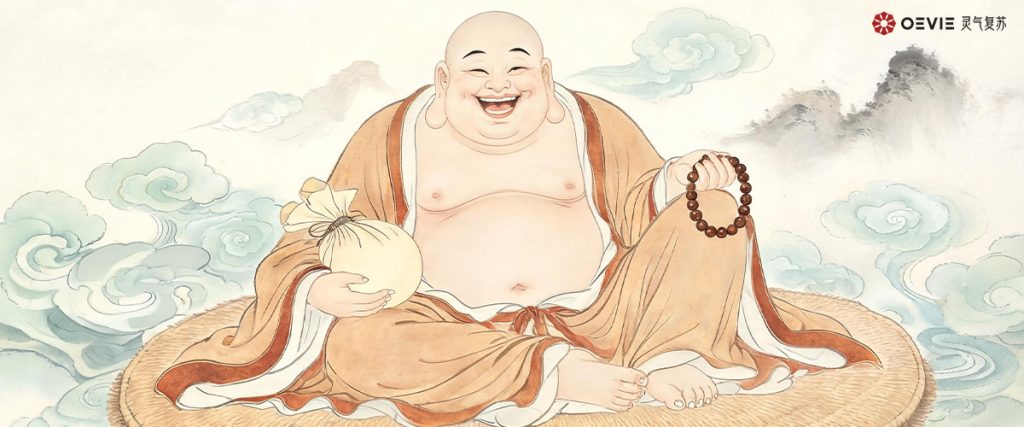
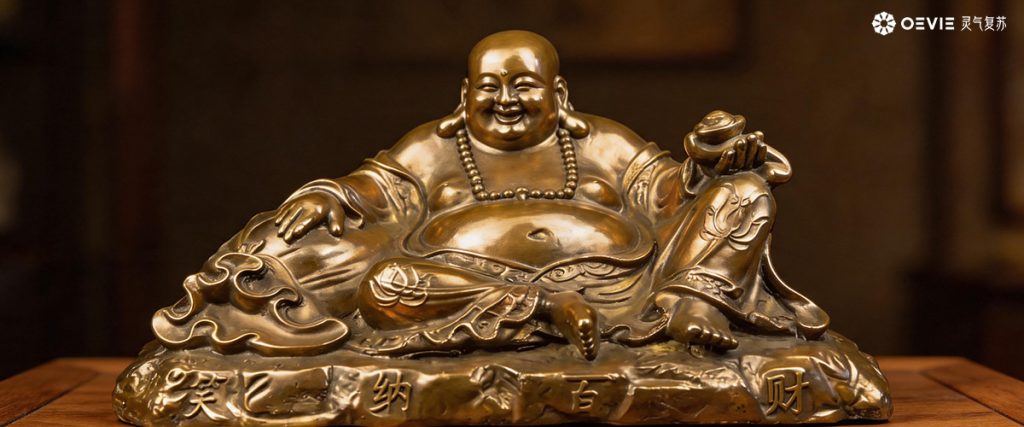
Walk into any Chinese Buddhist temple, and in the center of the Hall of the Heavenly Kings you will find him: bald, big-eared, bare-chested, beaming, prayer beads in one hand, a giant cloth sack in the other. He is not Shakyamuni. He is Maitreya — known to the people as the Laughing Buddha, the Big-Bellied Buddha, the Buddha of Joy. Of all Chinese statues, he is the most down-to-earth and the most beloved. When people come to burn incense, before they even pay respects to the Buddha, they first bow to him. When a shop opens, when a family moves into a new home, they invite a statue of him inside, seeking only two words: joy. Yet his story is far deeper than the image of a chubby, happy monk.
Fig.1 The Big-Bellied Maitreya, bare-chested and laughing, clutching a cloth sack — the most beloved "Buddha of Joy" in Chinese folk faith.
1. The "Buddha of the Future" from India
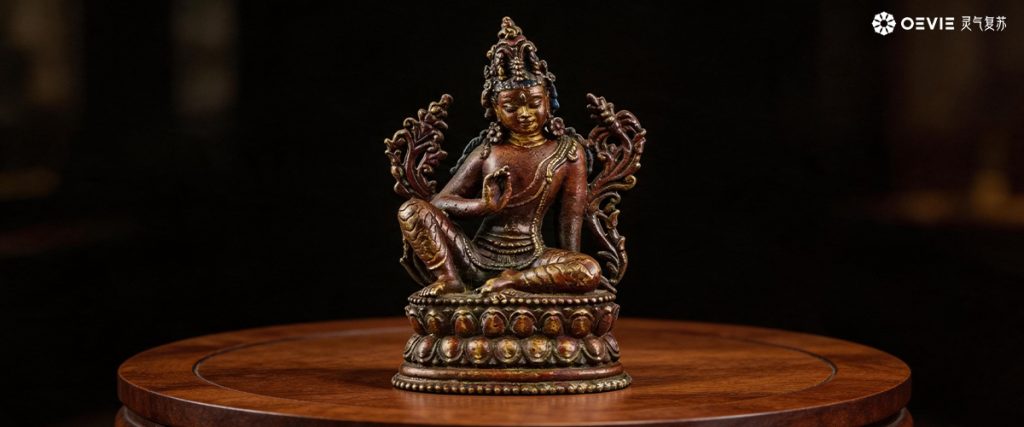
In the original teachings of Buddhism, Maitreya was never a fat man. He was the “Buddha of the Future.” According to the scriptures, Shakyamuni is the Buddha of the present; Maitreya is his successor, who, after five billion six hundred and seventy million years, will be born into this world and become the next Buddha. In early Indian images, he wears a jeweled crown and celestial adornments — a dignified, handsome Bodhisattva seated in the inner court of Tushita Heaven. He bears almost no resemblance to the bare-bellied laughing monk we know today.
So where did the fat monk come from? The answer lies in the Jiangnan region of China, more than a thousand years ago.
Fig.2 The early Indian depiction of the Bodhisattva Maitreya — crowned and bejeweled, dignified and serene, a far cry from the laughing fat monk known today.
2. Monk Budai: A Real, Eccentric Monk
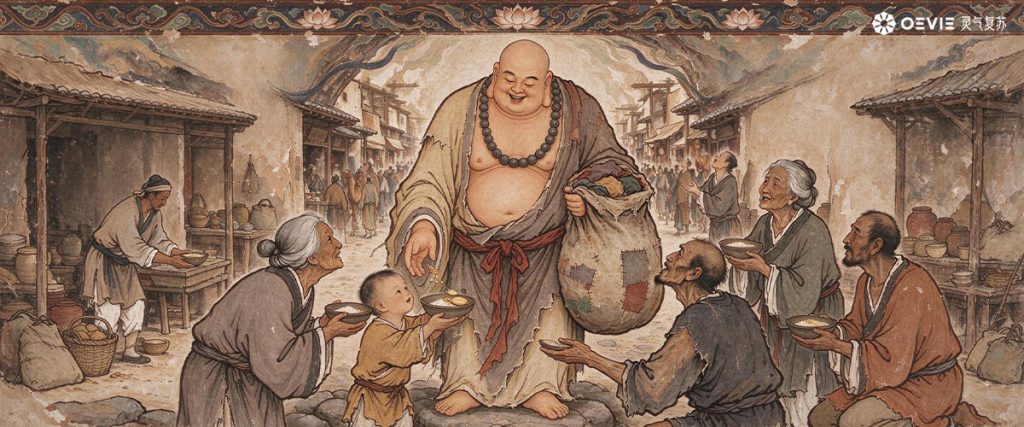
In the late Tang Dynasty, in Fenghua, Zhejiang, there lived a quirky monk named Qieci. He was short and round, his face all wrinkles, and all day long he carried a tattered cloth sack, begging in the market streets. Whatever he was given, he ate; whatever he could not finish, he stuffed into his sack. He wandered everywhere, playing with children on the road, and whenever he met a poor man, he would pour out the contents of his sack and share it. He seemed mad, yet every word he spoke came true. When rain was coming, he put on his straw sandals in advance; when drought was coming, he carried his wet slippers in his hand.
Fig.3 The Monk Budai, carrying a tattered cloth sack, begging and sharing his food in the market — the eccentric monk who actually lived in the Five Dynasties era.
In the second year of the Zhenming era of the Later Liang (916 AD), this monk Qieci sat down on a stone at Yuelin Temple in Fenghua and passed away. Before he died, he chanted a verse: “Maitreya, the true Maitreya, a hundred million incarnations he sends. Always he shows himself to the world, yet the world does not know him.” With these words, he passed peacefully away. Only then did people realize — this eccentric sack-carrying monk was an incarnation of the Bodhisattva Maitreya. From then on, the Chinese depicted Maitreya in his image: short and round, bare-bellied, laughing, carrying a great cloth sack. That laughter has now lasted over a thousand years.
3. What the Great Belly Holds
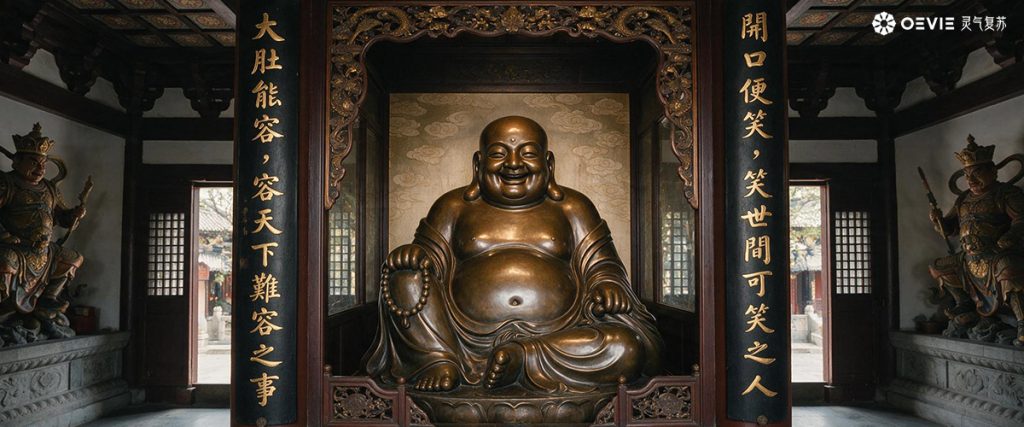
On both sides of Maitreya’s statue in the Heavenly Kings’ Hall, a couplet is always hung — a couplet almost every Chinese visitor can recite by heart:
Fig.4 The couplet beside Maitreya in the Hall of the Heavenly Kings: "His great belly bears what the world cannot bear; his open mouth laughs at what the world finds laughable."
“His great belly bears what the world cannot bear; his open mouth laughs at what the world finds laughable.”
This couplet is the whole secret of Maitreya. That great belly was not made by overeating. It was made by bearing — bearing the faults of others, bearing the injustices of the world, bearing the suffering he himself has known. That open mouth is not mindless joy. It is the relief of someone who has seen through. He laughs at those who fight to the blood over a little gain; he laughs at those who trap themselves in their own anxieties — yet there is no mockery in his laughter, only compassion. He is not blind to the world’s pain. Having understood it, he chooses to smile.
The cloth sack in his hand also means something. It holds not money, but the worries, griefs, and injustices of the world. He carries them for you, so that you may walk lighter. When a Chinese family invites a Maitreya statue into their home, they are not praying for wealth or promotion. They are asking for the grace of letting go.
4. Worship and Folk Customs: The Wisdom of Joy
In China, Maitreya is the most approachable of all the Buddhas. He does not sit in the grand Mahavira Hall; he sits at the very entrance of the Heavenly Kings’ Hall. The moment you step through the mountain gate, he is the first figure you see. He does not preach stern sermons. He smiles at everyone. There are countless folk customs tied to him. On New Year’s pictures, he is the “Child-Giving Maitreya” holding a baby. At shop openings, housewarmings, and birthdays, people give a Maitreya figure, wishing the recipient “a laughing mouth, great abundance.” Shopkeepers place him beside the cash register, hoping that warmth and harmony bring prosperity.
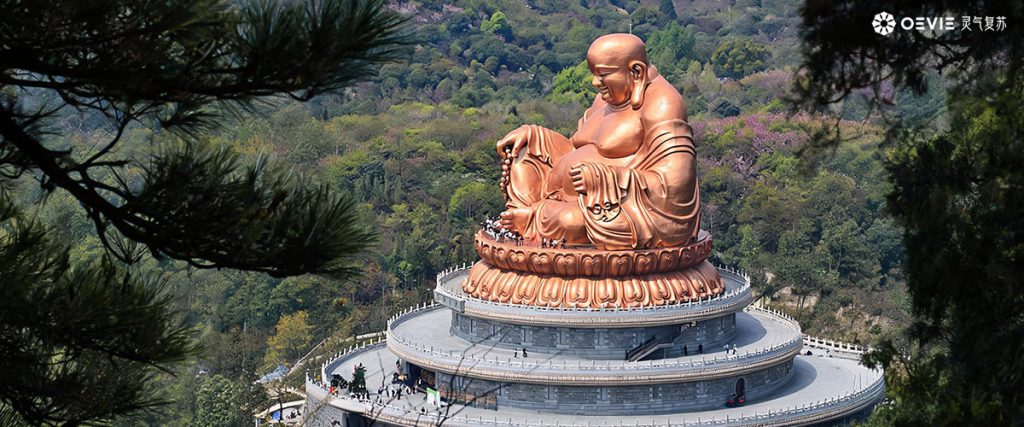
Fig.5 The great Maitreya Buddha on Mount Xuedou, Fenghua, Zhejiang — 56.7 meters tall, the tallest seated Maitreya statue in the world.
On Mount Xuedou in Fenghua, Zhejiang, stands Xuedou Temple, believed to be the sacred abode of Maitreya. The great Buddha in its courtyard stands 56.7 meters tall — precisely echoing the “five billion six hundred and seventy million years” of the scriptures, a hidden reference to the eons before he becomes a Buddha. Every year, more than a million pilgrims and travelers climb the mountain, not to ask for anything, but simply to look upon that smiling great Buddha, and to listen to the wind among the pines.
5. Maitreya Today: The Wisdom of Smiling at Life
We live in the fastest-paced age of all time. Anxiety, rat race, mortgages, the workplace, the children’s education — we are all like spinning tops wound too tight. Yet whenever you step into a temple and look up at that bare-bellied, heartily laughing monk, the taut string within you loosens, almost without your knowing. He seems to say: “What is the rush? The sky will not fall.” He does nothing. He only smiles. Yet that single smile has healed generation after generation of Chinese people.
He does not teach success. He does not teach wealth. He teaches only one thing: let go. Inside his great cloth sack are the grievances, the frustrations, the worries, and the exhaustion of a thousand years of Chinese life. He carries them all, and still he walks toward us, smiling. That is the whole wisdom of Maitreya: in an imperfect world, instead of frowning and shouldering every burden, smile — put down what should be put down, forgive what should be forgiven. A laughing mouth is not foolishness. It is the highest wisdom.