
If there is one undisputed star in the Chinese mythological pantheon, it is Sun Wukong. He is no dragon king seated in an underwater palace, no Bodhisattva wreathed in temple incense, no sage sitting solemnly in a book of classics. He is a monkey born from a stone, dressed in golden armor, wielding the Ruyi Jingu Bang, somersaulting ten thousand li in a single leap. For over four hundred years, from the storyteller’s wooden block to the opera stage, from children’s picture books to animated films, he has never left the scene. Chinese people love him not only for his seventy-two transformations, but because, once upon a time, he rebelled against Heaven on behalf of every soul ever bound by rules.
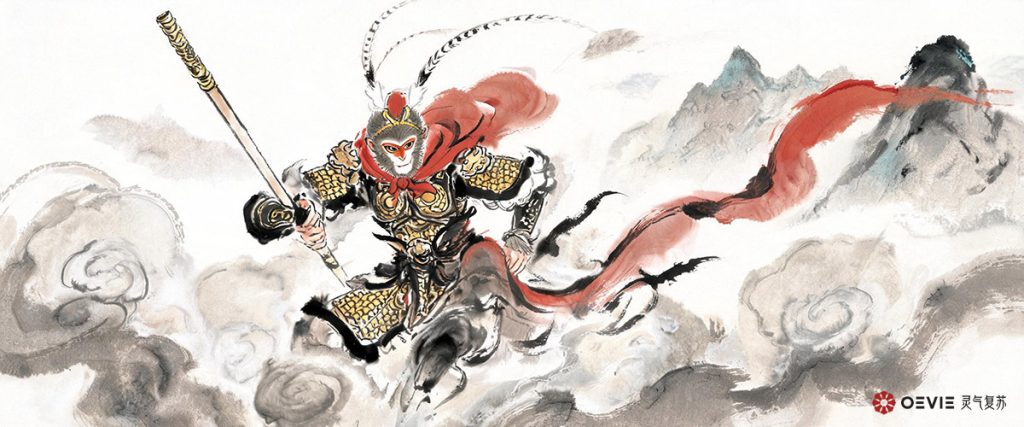
1. The Stone Monkey Who Became the Handsome King
On the eastern continent of Aolai, in the country of Flowers and Fruit, there rises a mountain called Mount Huaguo. At its summit stands a magic stone, nourished by the light of sun and moon. One day, the stone splits open and out leaps a stone egg; catching the wind, it transforms into a stone monkey. He walks, he talks, and with one bound he leads the troop through the Water Curtain Cave. From that day on, the monkeys crown him their king — the Handsome Monkey King.
Yet after three or five hundred years of joy, the monkey suddenly weeps. He realizes that he too will one day die. In search of immortality, he sails across the sea and becomes a disciple of Patriarch Subhuti, who gives him the name “Wukong” — Awakened to Emptiness — and teaches him the seventy-two transformations and the cloud-somersault. Returning, he storms the Dragon Palace and takes the golden pillar that had stood as the god of the sea’s anchor; he storms the underworld and erases his name from the Book of Life and Death; he storms Heaven itself and declares himself the “Great Sage Equal to Heaven.” When the Jade Emperor appoints him to tend the royal horses and he discovers it is but a stable hand’s post, in a rage he rebels and returns to earth. That great uproar in Heaven remains the most exhilarating passage in all of the Journey to the West.
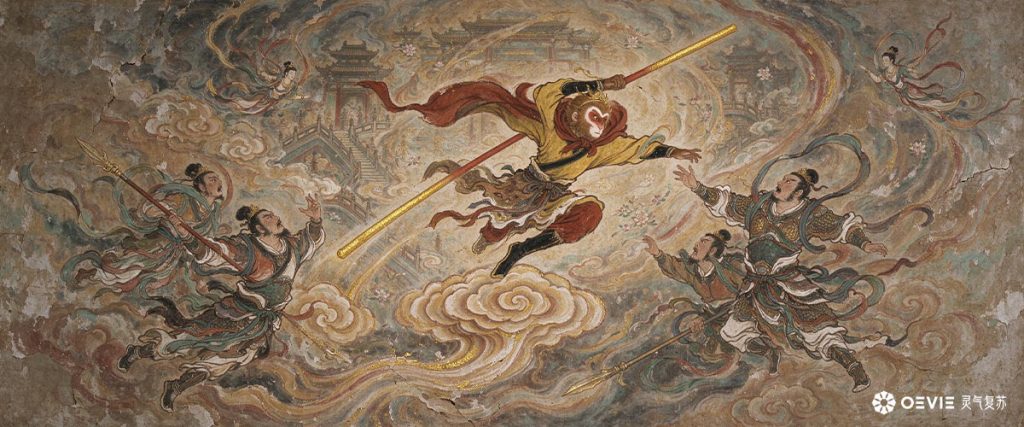
2. The Golden Headband: A Rebel Grows Up
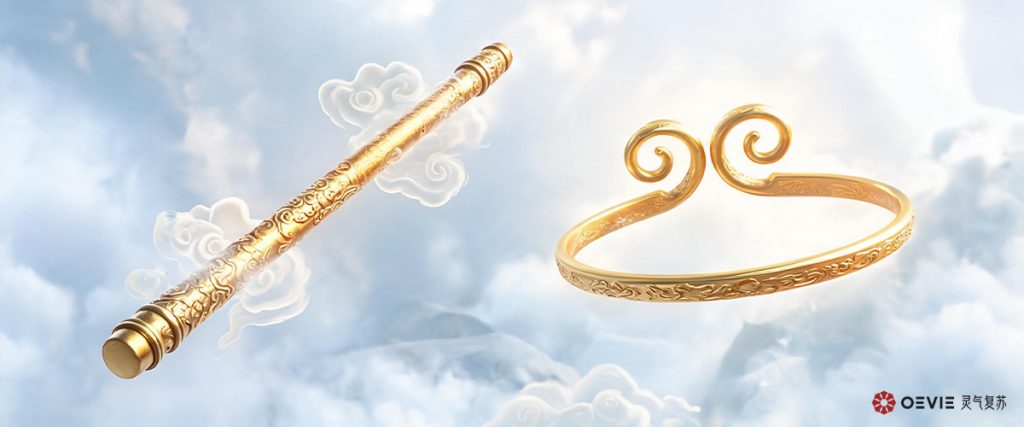
No matter how mighty the monkey, he cannot outmatch the hand of the Buddha. One palm descends, and five hundred years pass beneath the Five Elements Mountain. Only when the monk Tang Sanzang passes by, lifting the talisman, does he see the sky again. From that day, the tightening golden band rests on his head, and he becomes the monk’s eldest disciple, setting out on the journey of ten thousand and eight hundred li to fetch the scriptures.
Along the way, he vanquishes demons and monsters; with his fiery golden eyes he sees through the White Bone Demon’s three transformations. When he strikes her down three times, his master misjudges him and sends him away. Kneeling before Guanyin in the South Sea, his eyes are wet — it turns out the untamable monkey can also feel wronged. Through eighty-one trials, he grows from a stone monkey who cared only for his own freedom into a pilgrim willing to carry every burden for his companions. When the journey ends, he is named the “Victorious Fighting Buddha” — not because he has become obedient, but because he has defeated the wild monkey within himself.
3. Why He Has Endured for Four Centuries
The author of the Journey to the West, Wu Cheng’en, lived in the Jiajing era of the Ming Dynasty — a time of rigid ritual and stifling officialdom. For an ordinary person, to speak up, to say “no,” was almost unthinkable. So Wu Cheng’en poured all of his own unspoken grievances into a monkey.
What moves people most about Sun Wukong has never been his magic. It is his line: “Let emperors take turns; next year, my house will be the palace.“ He dares to scold the Jade Emperor, to mock the Buddha, to tease Guanyin. In a mythic world of rigid ranks, he is the one hero who refuses to be ruled. Every reader who has ever felt suffocated by conformity lives vicariously through him. Yet he is no mere rebel — he protects his master, he cherishes his brothers, he keeps his word. Beneath his defiance always beats an utterly innocent heart.
4. From the Stage to the Screen: A Monkey's Modern Life
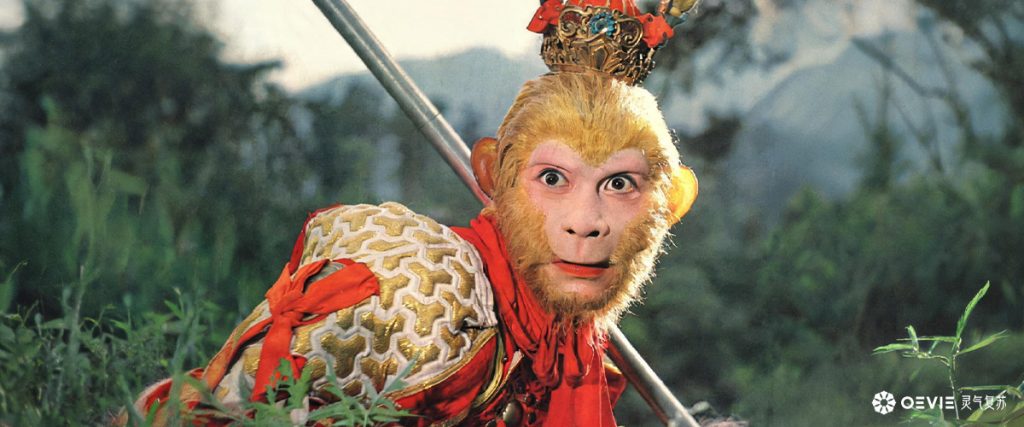
In the twentieth century, Sun Wukong became the busiest character in all of Chinese storytelling. In 1961, the Shanghai Animation Film Studio released Havoc in Heaven — the childhood memory of generations, with its opera-style Monkey King, Peking-opera choreography, and vivid Chinese colors, flying onto screens around the world. In 1986, the television series Journey to the West made Liu Xiao Ling Tong’s portrayal the “official” Monkey King in nearly every Chinese heart. And in 2015’s Monkey King: Hero Is Back, and the 2023 game Black Myth: Wukong, he returns to us once more in a new form.
Why does he never grow old? Because in every generation, there lives inside each of us a monkey who longs to make havoc in Heaven. In youth, we love him for his rebellion. In middle age, we understand the golden band. He leaps out from a crack in the stone and, in the end, becomes a Buddha — which is precisely the road every Chinese soul knows best: from “I refuse” to “I understand,” from “I want” to “I choose.”
5. The Victorious Fighting Buddha: The Wukong in Every Heart
Along the journey, half the demons Sun Wukong slays turn out to be mounts or servants belonging to the gods above. He sees through this web of connections clearly — yet still he raises his staff. He knows the world is not fair, that some grievances must be swallowed alone, and yet he still chooses to be the one who acts when it is time to act.
Today, many of us no longer read the original Journey to the West. Yet late at night, after overtime, we still call ourselves “wage-earning monkeys”; we still share an image of the Monkey King with the words, “This Old Sun is here!” That is our secret pact with him: while life fastens its golden band upon our heads, deep inside we still keep a little piece of Mount Huaguo. So long as that stone remains, we have not been crushed. The Victorious Fighting Buddha — he never conquered anyone but the one self within, the self that refuses to surrender.