
—— Guan Yin Bodhisattva: A Timeless Embodiment of Compassion in Chinese Culture ——
In all of China, there is perhaps no other Bodhisattva as universally known and invoked as Guan Yin. Grandmothers light incense before her image on the first and fifteenth of every lunar month; fishermen hang her name beside their boat rails; traveling scholars once tucked a small painting of her into their bags. She is not a distant, stern deity perched in the clouds, but rather a quiet elder who seems always ready to step through the door and listen until your heartache is spent. For nearly two thousand years, the belief in Guan Yin has traveled far beyond the boundaries of religion to become something woven into the emotional fabric of Chinese life.
1. From India to China: How a Bodhisattva Became Chinese
—— Guan Yin Bodhisattva: A Timeless Embodiment of Compassion in Chinese Culture ——
The name “Guan Yin” is the Chinese rendering of the Sanskrit “Avalokiteśvara,” meaning “the one who observes the sounds of the world.” The Bodhisattva first appears in ancient Indian Buddhist sutras, often depicted as a regal, mustached figure. Along the Silk Road and the maritime trade routes, the scriptures reached China during the Later Han Dynasty. In the turbulent centuries that followed — the Jin, the Northern and Southern dynasties, when war and displacement were everywhere — people desperately needed a savior who would heed every cry of suffering. And so a single line from the Lotus Sūtra was repeated, generation after generation: “When beings in anguish call her name with a single heart, the Bodhisattva instantly hears their voice and frees them all.”
—— Guan Yin Bodhisattva: A Timeless Embodiment of Compassion in Chinese Culture ——
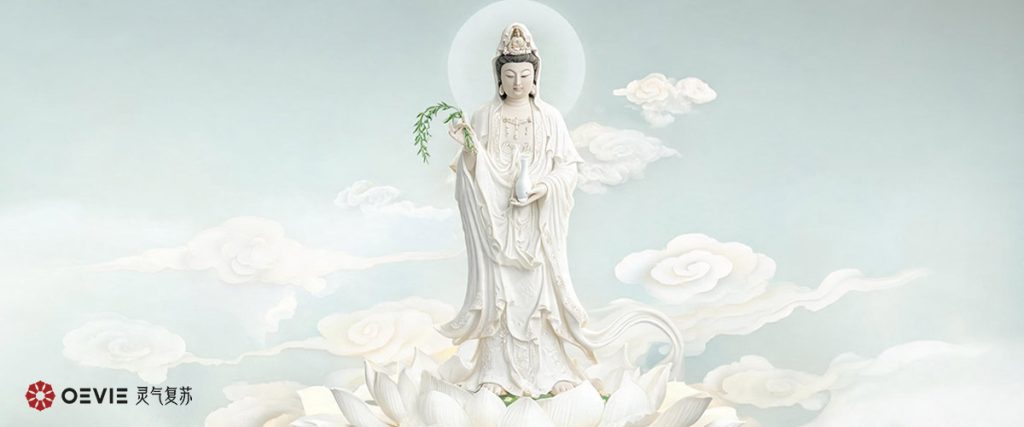
By the Tang and Song dynasties, the image of Guan Yin had quietly begun to change. Gradually, she shed her masculine features; her brows grew softer, her robes lighter, until she settled into the form we recognize today — a gentle woman in white, wearing a jeweled crown and holding a pure vase with a willow branch. This was never merely a change of clothing. It was the Chinese people pouring their own deepest understanding of “compassion” into the Bodhisattva’s face. In the Chinese imagination, the being most able to understand another’s pain is rarely a stern father — it is, almost always, a tender mother.
2. Princess Miao Shan: A Local Legend Takes Root
—— Guan Yin Bodhisattva: A Timeless Embodiment of Compassion in Chinese Culture ——
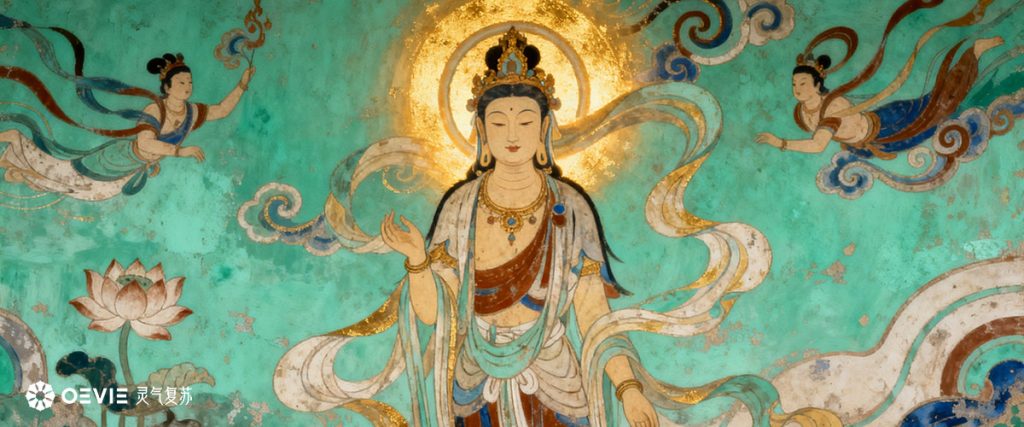
What truly brought Guan Yin into every household was the popular tale, widely told after the Song Dynasty, of Princess Miao Shan. Legend speaks of a certain King Miao Zhuang, who had three daughters. Only the youngest, Miao Shan, refused all marriage proposals and insisted on a life of spiritual practice. In his anger, the king exiled her to the cold palace and set her to hard labor in the gardens. Yet her resolve only deepened, and she finally attained enlightenment on Fragrant Mountain. Later, the king fell gravely ill; the remedy required, the healers said, the hand and eye of someone “free of resentment.” Disguised as a monk, Miao Shan did not hesitate to offer her own hand and eye. When the recovered king bowed in gratitude, he realized that the one who had saved him was the very daughter he had cast out.
—— Guan Yin Bodhisattva: A Timeless Embodiment of Compassion in Chinese Culture ——
The moving heart of this story is not the miracle — it is the word “forgiveness.” It turned Guan Yin from a distant name in a sutra into a daughter who, though misunderstood and wounded, still turns back to embrace all beings. From that day forward, to venerate Guan Yin was to venerate something deeper: a conviction that one may remain gentle even after being wronged.
3. A Thousand Forms, A Thousand Answers
—— Guan Yin Bodhisattva: A Timeless Embodiment of Compassion in Chinese Culture ——
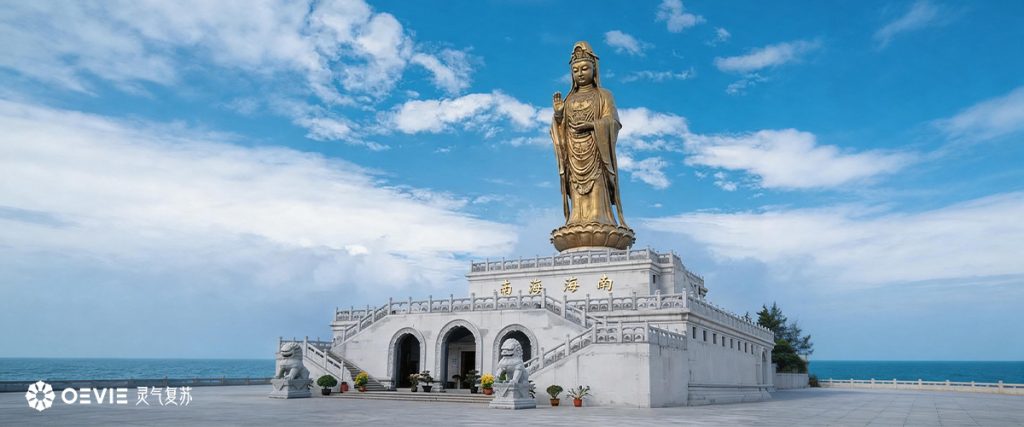
In folk belief, Guan Yin appears in more than one form. White-Robe Guan Yin, seated on a lotus in plain white, is the image most often enshrined at home. Child-Giving Guan Yin cradles an infant, answering the longings of countless families. Thousand-Armed, Thousand-Eyed Guan Yin holds a different sacred object in each hand, her thousand eyes watching over every corner of the world — so that not a single being is overlooked. South-Sea Guan Yin stands above the blue waves, vase in hand, offering the fearlessness mudrā; she is the presiding image of Mount Putuo. And Water-Moon Guan Yin, reclining beneath a cliff, gazing at her own reflection in the water, is the most serene and poetic image of all.
—— Guan Yin Bodhisattva: A Timeless Embodiment of Compassion in Chinese Culture ——
Mount Putuo is the only one of China’s Four Sacred Buddhist Mountains that rises from the sea. Legend has it that in the Tang Dynasty, a Japanese monk once tried to bring a statue of Guan Yin back by ship from Mount Wutai. When storms blocked his way, he understood that the Bodhisattva did not wish to cross the ocean; he built a hermitage on the island, and named it the Temple of the “Reluctant-to-Depart Guan Yin.” Ever since, Putuo has been, in Chinese hearts, the “South Sea” — even in inland provinces, elderly devotees still pray, “O Guan Yin of the South Sea.”
4. The Human Heart Behind the Incense
—— Guan Yin Bodhisattva: A Timeless Embodiment of Compassion in Chinese Culture ——
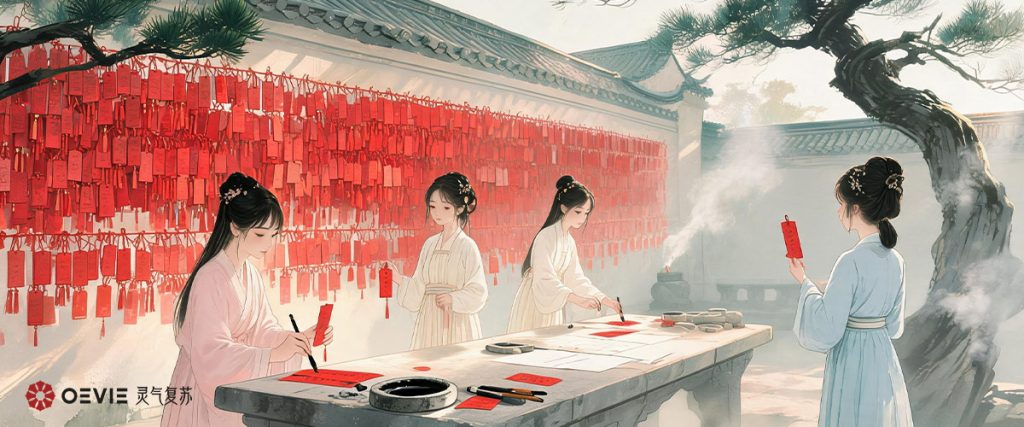
The nineteenth day of the second lunar month is Guan Yin’s birthday; of the sixth, her enlightenment; of the ninth, her renunciation. On these three days, temples everywhere are crowded with worshippers. But if you draw closer, you will notice that the ones truly kneeling on the cushions are rarely those seeking great wealth. There is a mother praying for a sick child; a young person, freshly out of surgery, clutching a string of beads; an elderly grandmother asking only that her grandchild, working in a faraway city, be safe.
—— Guan Yin Bodhisattva: A Timeless Embodiment of Compassion in Chinese Culture ——
What they seek has never been “riches falling from the sky.” It is simply a place where the heart can settle. As a single stick of incense curls upward, for a brief moment, a person sets down their anxiety, their guilt, their longing. That is the truest face of Guan Yin worship today — it may not be religion in any formal sense. It is, rather, an Eastern way of making room for the soul. The very act of believing that someone is listening is, in itself, a kind of comfort.
5. Guan Yin Today: From Sutras to Modern Life
—— Guan Yin Bodhisattva: A Timeless Embodiment of Compassion in Chinese Culture ——
Many of us no longer walk into temples to burn incense, yet we still meet Guan Yin in a prayer bead bracelet, a small jade pendant, a bookmark tucked into a book. Her image appears on pendants and phone cases; in films and television, she is almost always the one who opens the door when the hero has lost all hope. Some call this commercialization. But seen another way, it only proves that compassion is a language that never goes out of fashion.
—— Guan Yin Bodhisattva: A Timeless Embodiment of Compassion in Chinese Culture ——
What Guan Yin has left to the Chinese people is never a complicated doctrine, but one simple instruction: “Keep a kind heart, and those around you will, little by little, be treated with tenderness.” Sutras may yellow, temples may crumble. But so long as there remains someone, somewhere, who is willing to light a lamp for a stranger in the darkest hour of the night — Guan Yin is still, and always will be, with us.