The Traditional Chinese Culture of the God of Wealth
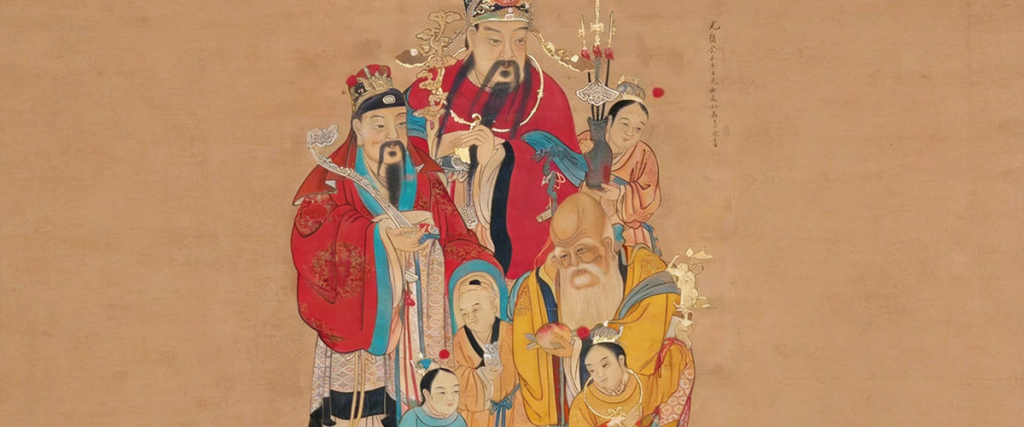
Folk traditional portrait of the God of Wealth
In traditional Chinese folk culture, the God of Wealth is an auspicious deity widely revered among ordinary people. For thousands of years, folk worship of the God of Wealth is not merely a pursuit of money. More importantly, it embodies people’s sincere wishes for stable lives and prosperous families. Rooted in agrarian civilisation, the God‑of‑Wealth culture combines Taoist beliefs, folk legends and festival customs, forming an indispensable part of Chinese folklore. During Spring Festival, families paste portraits of the God of Wealth, and rituals to welcome and honour the deity have been passed down generation after generation.
Civil and Martial Gods of Wealth: Two Major Traditions
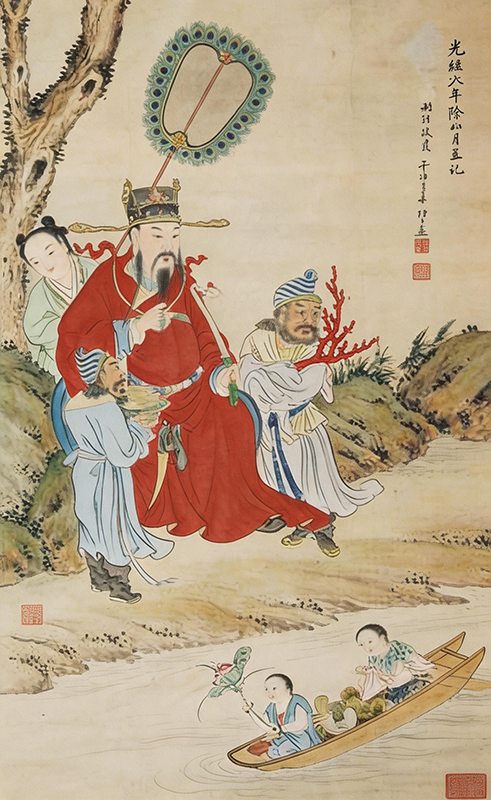
Image of Civil God of Wealth Bi Gan
Folk Gods of Wealth fall into two categories: Civil God of Wealth and Martial God of Wealth. The Civil God of Wealth appears as a gentle scholar‑official, usually holding jade ruyi ornaments or gold ingots. The most well‑known civil figures are Bi Gan and Fan Li. According to legend, Bi Gan was loyal, upright and impartial. He is honoured as Civil God of Wealth, symbolising fair business practices and righteous wealth creation. Fan Li was a brilliant merchant who accumulated and distributed great fortunes many times. Known as the Sage of Commerce, he is also venerated as a Civil God of Wealth. Civil Gods of Wealth are widely worshipped at home, symbolising household prosperity and lasting blessings.
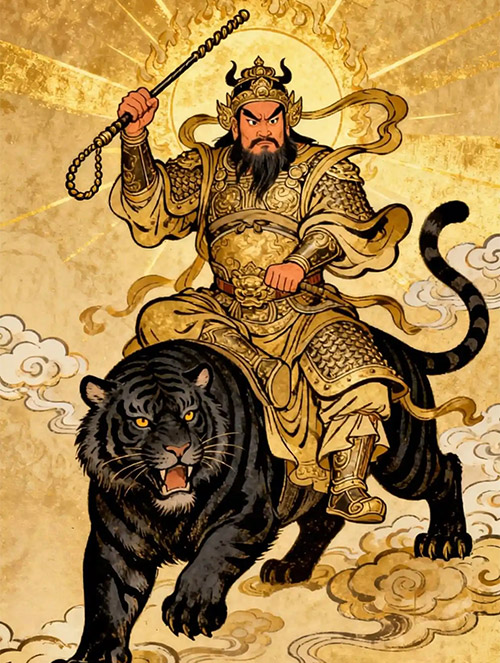
Image of Civil God of Wealth Bi Gan
The main Martial Gods of Wealth are Zhao Gongming and Guan Yu (Lord Guan). They appear mighty and upright. Zhao Gongming is the orthodox Taoist God of Wealth in charge of treasures across the world. Guan Yu is celebrated for loyalty and integrity. Merchants admire his moral character; many shops and businesses enshrine him, hoping to run honest businesses and gain steady income. Martial Gods of Wealth are commonly worshipped in stores for wealth attraction as well as safety and spiritual protection.
Folk Customs to Welcome the God of Wealth
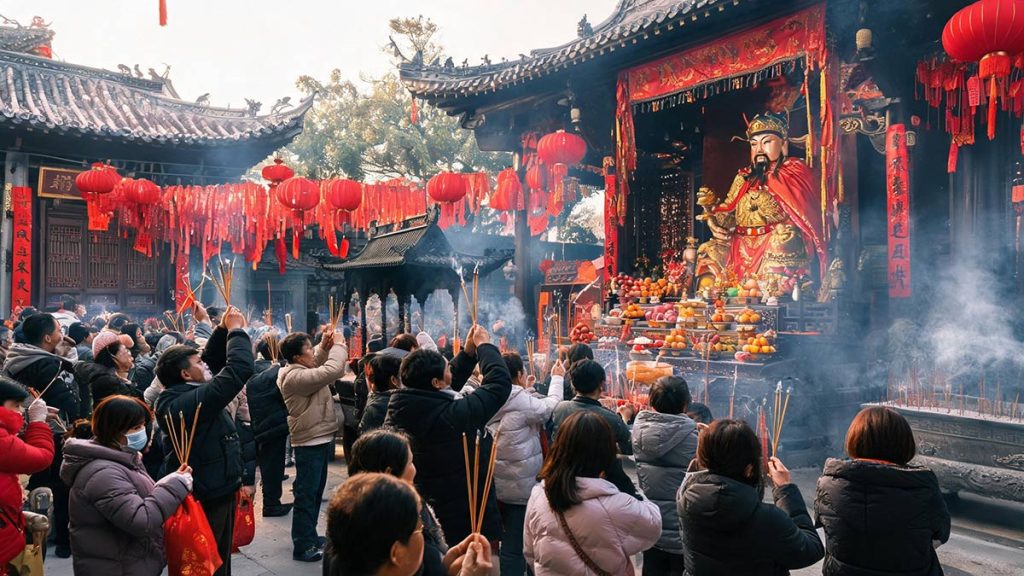
The fifth day of the first lunar month is the traditional day for “Welcoming the God of Wealth”. On this day, people open doors and windows and set off firecrackers to invite fortune into their households. In many regions, offerings of fruits, pastries and incense are arranged to show reverence. At its heart, this custom does not mean wishing for unearned riches. Ancient Chinese believed wealth comes from hard work and integrity. Worship of the God of Wealth represents values of diligence, fairness and trustworthiness.
Folk scene of welcoming the God of Wealth on the fifth day of first lunar month
Modern Significance of God‑of‑Wealth Culture
Today, the culture of the God of Wealth remains alive in daily life. God‑of‑Wealth motifs appear in New‑Year paintings, ornaments and cultural‑creative products. Modern people view this tradition not as superstition. It carries simple Chinese hopes: successful careers and secure living for families. It reminds us that wealth comes from hard‑working efforts and honest dealings; morality should go hand‑in‑hand with prosperity. The traditional culture of the God of Wealth is a lively heritage of Chinese folk customs.